
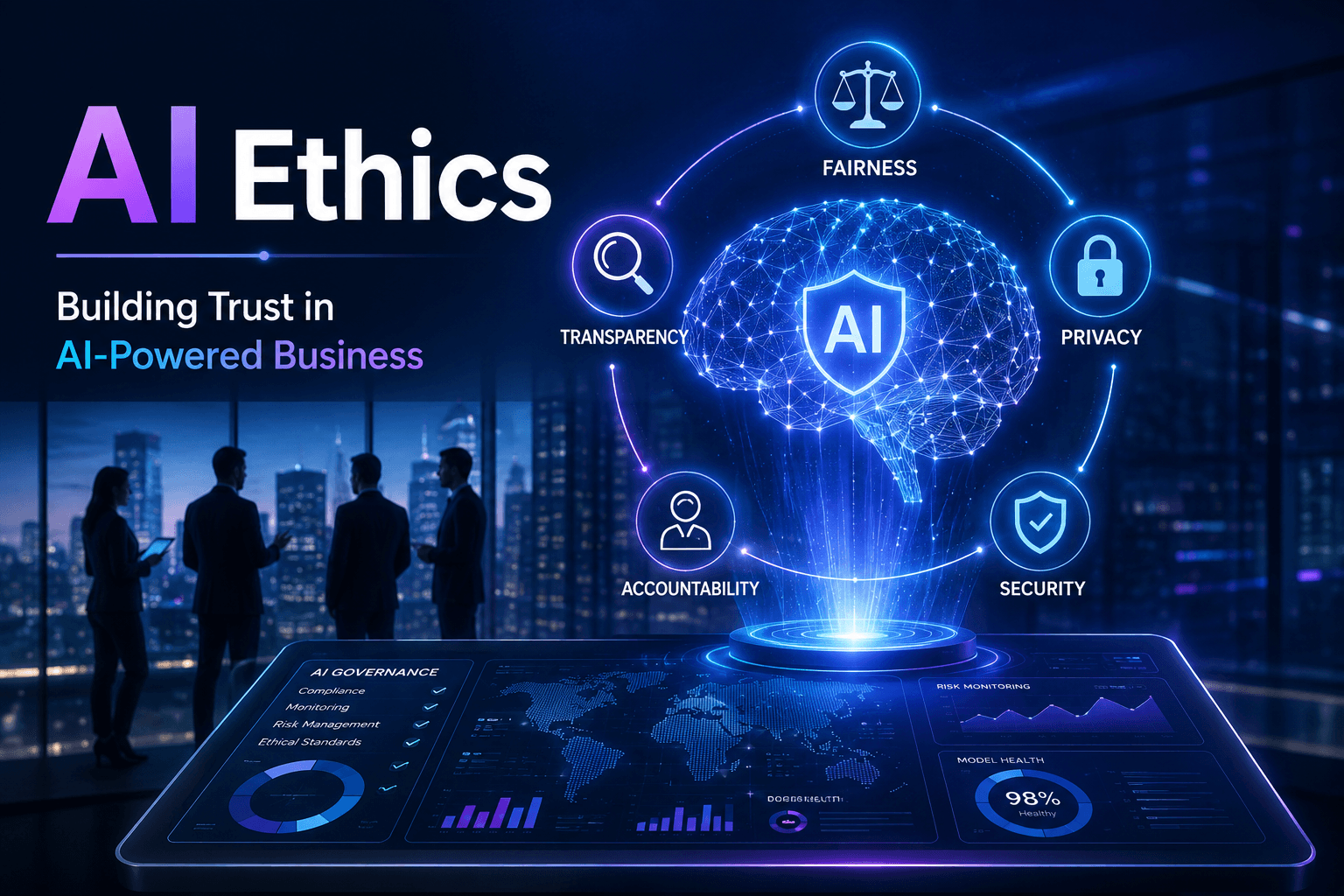
Artificial Intelligence (AI) is no longer a futuristic concept. Today, businesses across industries use AI to automate operations, improve customer experiences, analyze large datasets, and drive innovation. From intelligent chatbots and recommendation engines to predictive analytics and custom business applications, AI has become a strategic asset for organizations seeking a competitive advantage.
However, as AI adoption continues to grow, so do concerns surrounding fairness, privacy, transparency, accountability, and responsible decision-making. While AI offers remarkable opportunities, businesses must ensure that these technologies are developed and deployed ethically.
Organizations investing in AI-driven solutions should focus not only on innovation but also on responsible implementation. Companies exploring custom AI integrations, intelligent automation, and digital transformation initiatives often seek guidance from experienced technology partners through resources such as the Technobot System platform to better understand modern AI implementation practices.
In this article, we will explore the importance of AI Ethics, the challenges businesses face, and the key considerations organizations should keep in mind when implementing AI systems.
Why AI Ethics Matters in Business
AI ethics refers to the principles and standards that guide the responsible design, development, deployment, and use of artificial intelligence technologies.
Ethical AI aims to ensure that AI systems:
- Are fair and unbiased
- Protect user privacy
- Maintain transparency
- Support accountability
- Respect human rights
- Operate safely and securely
Without ethical safeguards, AI systems can create unintended consequences such as discrimination, misinformation, privacy violations, and reputational damage.
As businesses increasingly rely on automated decision-making, ethical considerations become critical for maintaining customer trust and regulatory compliance.
Understanding the Growing Impact of AI
AI influences many aspects of business operations today.
Examples include:
- Customer support chatbots
- Fraud detection systems
- Recruitment and hiring platforms
- Credit scoring models
- Healthcare diagnostics
- Marketing automation
- Supply chain optimization
- Personalized recommendations
While these applications improve efficiency, they also make decisions that directly affect people.
Consequently, organizations must ensure that these decisions remain fair, explainable, and accountable.
AI Ethics: What Businesses Should Keep in Mind
Implementing ethical AI requires more than simply following regulations. It involves creating a culture of responsibility throughout the AI lifecycle.
Below are the key areas every business should consider.
Ensuring Fairness and Eliminating Bias
One of the biggest concerns in AI ethics is algorithmic bias.
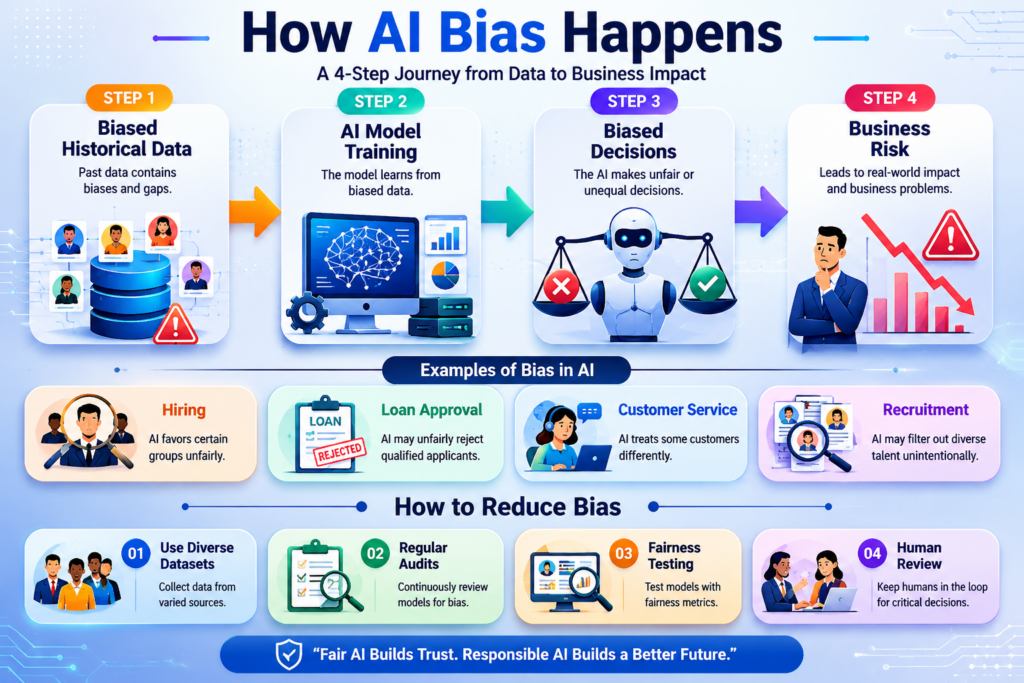
AI models learn from historical data. If the training data contains biases, the resulting AI system may unintentionally reinforce those biases.
Common Sources of AI Bias
Bias can originate from:
- Incomplete datasets
- Historical discrimination
- Data collection errors
- Human labeling mistakes
- Unequal representation of groups
For example, a recruitment AI trained on historical hiring data may favor certain demographics if past hiring practices were biased.
How Businesses Can Reduce Bias
Organizations should:
- Use diverse datasets
- Regularly audit AI models
- Conduct fairness testing
- Monitor outcomes continuously
- Include diverse teams during development
According to research from the National Institute of Standards and Technology (NIST), organizations should implement ongoing risk management frameworks to identify and mitigate AI-related risks throughout development and deployment.
By proactively addressing bias, businesses can improve fairness and strengthen stakeholder trust.
Prioritizing Data Privacy and Security
AI systems depend heavily on data.
The more sophisticated the AI solution, the greater the need for high-quality data collection and processing.
However, handling personal information comes with significant ethical responsibilities.
Key Privacy Concerns
Businesses must address:
- Unauthorized data collection
- Excessive data retention
- Lack of user consent
- Data breaches
- Third-party data misuse
Consumers today are increasingly aware of how their data is being used.
As a result, transparency and privacy protection are becoming competitive differentiators.
Best Practices for Ethical Data Use
Organizations should:
- Obtain clear user consent
- Collect only necessary data
- Encrypt sensitive information
- Implement access controls
- Follow data protection regulations
- Conduct regular security audits
Strong privacy practices help businesses build long-term customer confidence while reducing legal and financial risks.
Maintaining Transparency in AI Systems
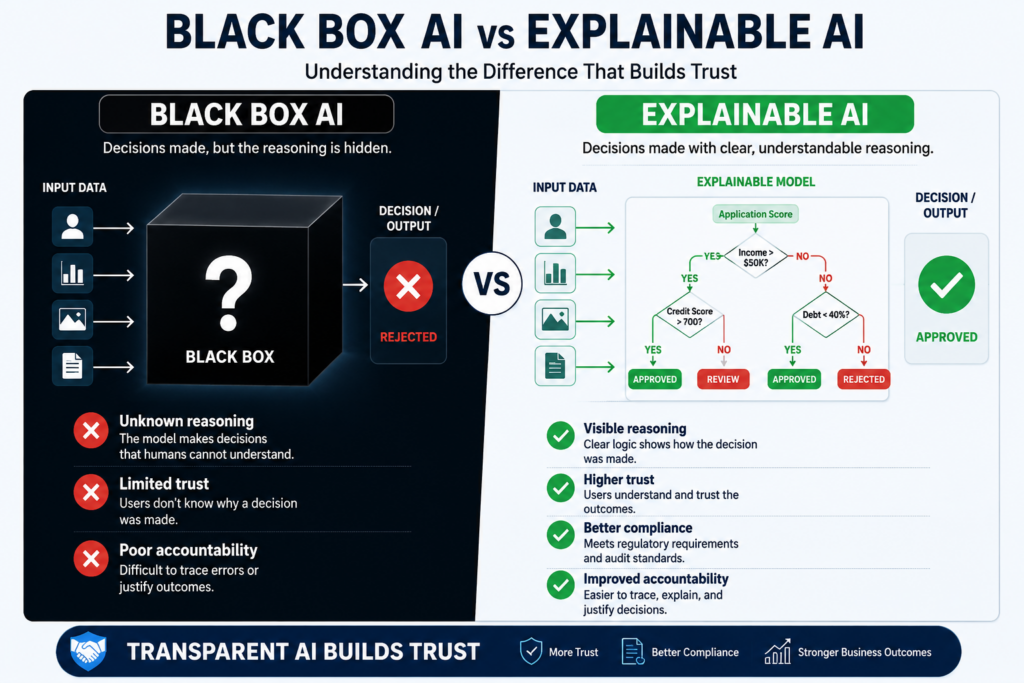
Many AI systems operate as “black boxes,” making decisions without clearly explaining how those decisions were reached.
This lack of transparency can create trust issues.
Customers, employees, and regulators increasingly expect businesses to explain AI-driven outcomes.
Why Transparency Matters
Transparency helps:
- Build customer trust
- Improve accountability
- Support regulatory compliance
- Reduce confusion
- Enable better decision-making
For example, if a customer is denied a loan through an AI-powered process, they should understand the factors that contributed to that decision.
Building Explainable AI
Businesses can improve transparency by:
- Documenting AI models
- Explaining decision criteria
- Providing user-friendly explanations
- Tracking model performance
- Maintaining audit trails
The concept of Explainable AI (XAI) has become increasingly important for industries where decisions significantly impact individuals.
Establishing Accountability for AI Decisions
AI systems do not operate independently of human responsibility.
Even when automation handles decision-making, businesses remain accountable for the outcomes.
Questions Every Organization Should Answer
- Who owns AI governance?
- Who reviews AI decisions?
- Who responds to errors?
- Who handles ethical concerns?
- Who monitors compliance?
Without clear accountability structures, organizations may struggle to address AI-related issues effectively.
Creating an AI Governance Framework
A strong governance strategy should include:
- Ethical AI policies
- Executive oversight
- Risk management procedures
- Compliance monitoring
- Incident response plans
Organizations that establish governance early often experience smoother AI adoption and stronger stakeholder confidence.
Ensuring Human Oversight
While AI can automate repetitive processes, human judgment remains essential.
Certain decisions should never be fully delegated to machines.
Examples include:
- Hiring decisions
- Medical diagnoses
- Legal recommendations
- Financial approvals
- Security assessments
Human oversight helps identify errors that AI systems may overlook.
Human-in-the-Loop Approach
Many organizations implement a Human-in-the-Loop (HITL) model where:
- AI generates recommendations.
- Humans review results.
- Final decisions remain under human control.
This approach balances efficiency with ethical responsibility.
Businesses developing intelligent platforms and automation workflows often combine AI capabilities with human validation to improve reliability and reduce risks.
Addressing Regulatory Compliance
Governments worldwide are introducing regulations focused on responsible AI use.
Businesses that fail to prepare may face legal, financial, and reputational consequences.
Emerging AI Regulations
Organizations should monitor developments related to:
- Data protection laws
- AI transparency requirements
- Consumer protection regulations
- Industry-specific compliance standards
For example, the European Union AI Act is establishing one of the world’s most comprehensive AI governance frameworks.
Compliance Best Practices
Businesses should:
- Conduct AI risk assessments
- Maintain documentation
- Monitor regulatory updates
- Train employees on compliance
- Establish internal review processes
Proactive compliance efforts help organizations avoid costly penalties while promoting responsible innovation.
Preventing AI Security Risks
As AI adoption increases, cybercriminals are also leveraging AI technologies.
Organizations must secure both their AI systems and the data powering them.
Common AI Security Threats
These include:
- Data poisoning attacks
- Adversarial attacks
- Model theft
- Prompt injection attacks
- Unauthorized access
A compromised AI system can produce inaccurate outcomes and damage business operations.
Strengthening AI Security
Businesses should:
- Secure training datasets
- Implement access management
- Monitor AI outputs
- Conduct penetration testing
- Establish security monitoring procedures
Organizations interested in broader cybersecurity and technology best practices often explore educational resources available through the Technobot System Blog to stay informed about emerging digital risks and solutions.
Avoiding Overreliance on Automation
AI can improve efficiency, but excessive dependence can create new vulnerabilities.
Automation should support decision-making, not replace critical thinking.
Risks of Over-Automation
Potential challenges include:
- Reduced human expertise
- Poor handling of exceptions
- Lack of contextual understanding
- Customer dissatisfaction
- Increased operational risk
Businesses should carefully evaluate where automation adds value and where human involvement remains necessary.
A balanced approach typically delivers the best results.
Promoting Ethical AI Culture Within Organizations
AI ethics is not solely a technology issue.
It is also a leadership and organizational culture issue.
Companies must ensure employees understand ethical responsibilities related to AI development and usage.
Building an Ethical AI Culture
Organizations can encourage responsible AI practices through:
- Employee training programs
- Ethics committees
- Cross-functional collaboration
- Continuous education
- Leadership accountability
Ethical considerations should be integrated into every stage of the AI lifecycle.
Developing an Ethical AI Framework
Businesses can establish a structured framework to guide responsible AI initiatives.
Key Components of an Ethical AI Framework
1. Ethical Principles
Define organizational values such as:
- Fairness
- Transparency
- Privacy
- Accountability
- Security
2. Risk Assessment
Evaluate potential impacts before deployment.
3. Governance Structure
Assign responsibilities across departments.
4. Monitoring and Auditing
Continuously review system performance.
5. Stakeholder Engagement
Gather feedback from customers, employees, and partners.
This framework creates a foundation for sustainable and trustworthy AI adoption.
Practical Questions Businesses Should Ask Before Deploying AI
Before launching any AI solution, organizations should consider the following:
Data
- Is the data accurate?
- Is user consent documented?
- Is sensitive information protected?
Fairness
- Has bias testing been completed?
- Are all user groups represented?
Transparency
- Can decisions be explained?
- Are users informed about AI involvement?
Accountability
- Who owns the system?
- Who responds to ethical concerns?
Security
- Are AI models protected from attacks?
- Are monitoring systems in place?
Answering these questions helps organizations identify risks early and improve deployment outcomes.
The Future of AI Ethics in Business
AI ethics will become increasingly important as AI systems become more sophisticated.
Future developments may include:
- Stronger regulations
- Greater transparency requirements
- Industry-specific AI standards
- Advanced governance frameworks
- Improved explainable AI technologies
Businesses that prioritize ethical AI today will be better positioned to adapt to future expectations.
Moreover, responsible AI practices can become a competitive advantage by strengthening customer trust, improving brand reputation, and reducing operational risks.
Organizations investing in AI-powered digital products, intelligent automation, and custom software solutions should ensure ethics remains a core component of their innovation strategy. Technology partners with expertise in custom development and responsible system design, such as those offering services through Technobot System’s software development solutions, can help organizations build scalable and ethical AI-enabled applications.
Conclusion
As AI continues transforming industries, organizations must recognize that innovation and responsibility go hand in hand. The discussion around AI Ethics is no longer optional—it is a fundamental business requirement.
Businesses that prioritize fairness, transparency, privacy, accountability, security, and human oversight can build AI systems that create value while maintaining trust. Conversely, organizations that overlook ethical considerations risk reputational damage, compliance issues, and unintended consequences.
The future belongs to companies that embrace responsible innovation. By embedding AI Ethics into strategy, governance, and technology development processes, businesses can confidently leverage artificial intelligence while protecting customers, employees, and society as a whole.
Tags
Share this article
About the Author
Experienced IT professional specializing in enterprise solutions and modern technology implementations.
Related Articles


Stay Updated
Get the latest IT insights delivered to your inbox.