
Introduction – Why Mobile App Security Matters More Than Ever
In 2026, mobile apps are no longer just tools — they are financial platforms, healthcare systems, identity wallets, and business hubs. From banking apps to AI-powered chat platforms, users trust mobile apps with their most sensitive personal and financial data.
However, as mobile usage grows, so do cyber threats.
📊 According to global security reports, over 70% of data breaches in 2025 involved mobile applications, and this number is expected to rise in 2026.
Therefore, mobile app security is no longer optional — it is a survival requirement.
🔐 “In 2026, the most valuable feature of an app is not its design — it is its security.”
Companies that ignore mobile security risk:
- Data leaks
- Financial fraud
- Legal penalties
- Loss of customer trust
- App store bans
At Technobot System Pvt. Ltd., we integrate security-by-design into every mobile app we develop, ensuring that businesses are protected from modern cyber risks.
What Is Mobile App Security?
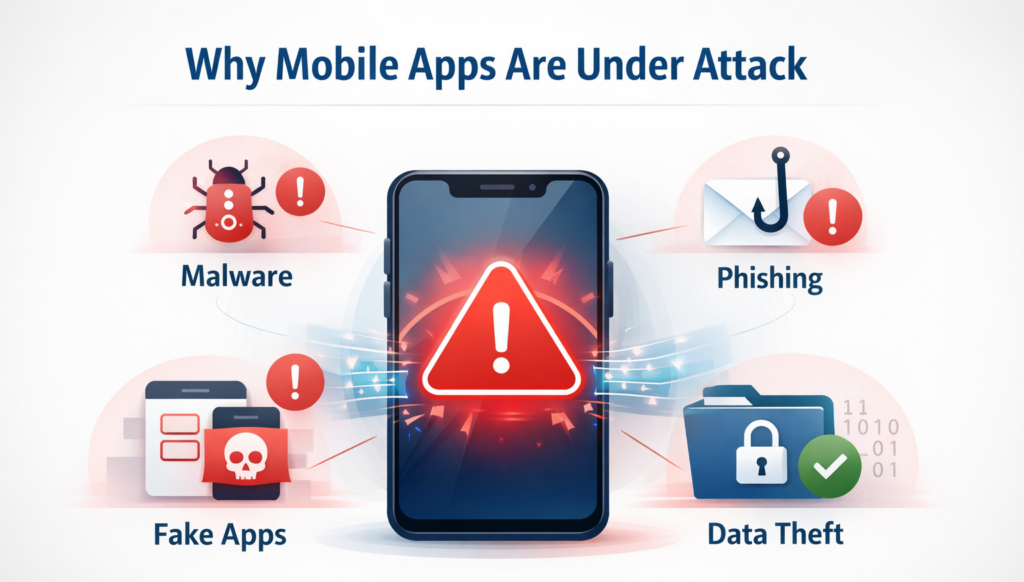
Mobile App Security refers to the protection of mobile applications from threats such as hacking, malware, data theft, reverse engineering, and unauthorized access.
It includes:
- Code security
- Data encryption
- Secure APIs
- User authentication
- Cloud protection
- Device-level safety
In other words, mobile app security ensures that every interaction inside your app remains private, safe, and tamper-proof.
Why Mobile App Security Will Be Critical in 2026
The mobile ecosystem in 2026 is radically different from previous years.
Here is why security is now mission-critical:
AI-Powered Cyber Attacks
Hackers now use AI to detect vulnerabilities in apps automatically.
Digital Wallet Explosion
UPI, crypto, BNPL, and biometric payments are everywhere.
Healthcare & Identity Apps
Apps store medical records, Aadhaar, driving licenses, and passports.
Cloud-Based Apps
Most apps rely on APIs and cloud servers — making them more vulnerable.
Therefore, without advanced security controls, one small vulnerability can compromise millions of users.
Mobile App Security Best Practices for 2026
Below are the most effective, modern, and future-proof security practices every business must implement.
Secure Code from Day One (Security-First Development)
Many apps are hacked because security is added later.
In 2026, the rule is:
🛑 “If it is not secure by design, it is not acceptable.”
Best practices:
- Use secure coding standards (OWASP Mobile Top 10)
- Prevent SQL injection, XSS, and buffer overflow
- Validate every input on client and server side
- Avoid hard-coding API keys or secrets
At Technobot System, we follow secure-by-architecture mobile app development:
Use Strong Authentication (Beyond Passwords)
Passwords alone are no longer safe.
In 2026, apps must use:
- Biometric login (Face ID, fingerprint)
- OTP verification
- Multi-factor authentication (MFA)
- Device-based authentication
This ensures that even if a password is stolen, hackers cannot log in.
End-to-End Data Encryption
All user data must be encrypted:
- While stored (at rest)
- While transferred (in transit)
Use:
- AES-256 encryption
- TLS 1.3
- Secure key management
This prevents hackers from reading stolen data.
Secure APIs & Cloud Connections
Most mobile apps rely on APIs.
Therefore:
- Use token-based authentication (JWT, OAuth)
- Rate-limit requests
- Validate every API call
- Block suspicious IPs
Protect Against Reverse Engineering
Hackers decompile apps to steal logic and data.
In 2026, apps must use:
- Code obfuscation
- Anti-tampering
- Root & jailbreak detection
This keeps your app intellectually and financially protected.
AI-Based Threat Detection
Modern apps now use:
- AI to detect abnormal behavior
- Fraud patterns
- Unauthorized logins
- Bot attacks
This allows apps to block threats in real time.
Secure Payment & Financial Data
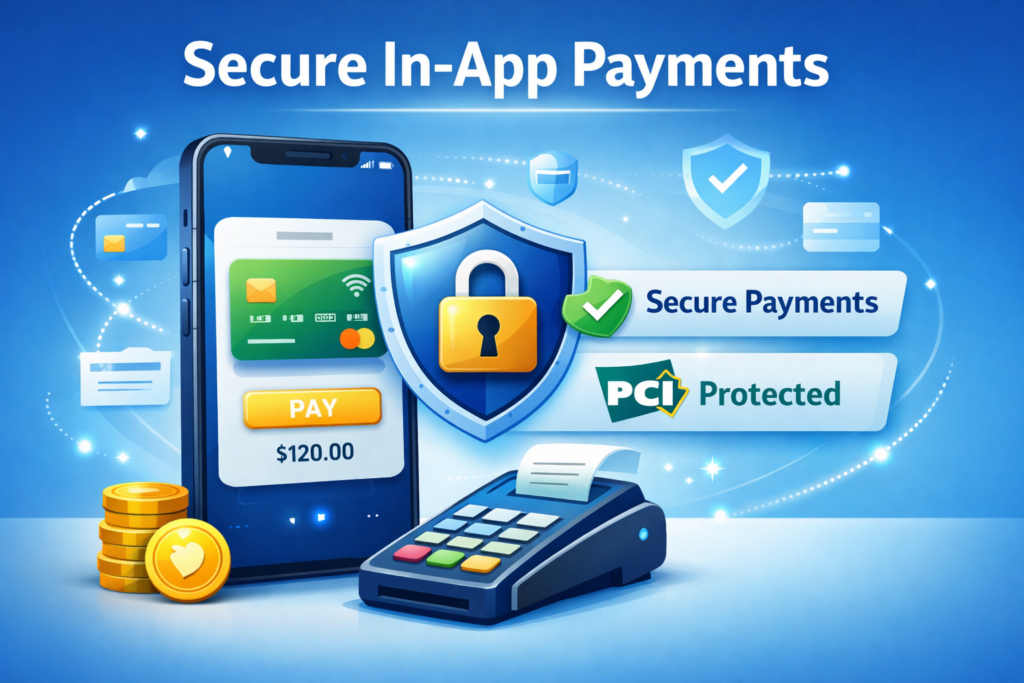
If your app processes payments, you must follow:
- PCI-DSS compliance
- Tokenized payment gateways
- Encrypted storage
- No card data saved locally
This prevents fraud and legal risks.
Common Mobile App Security Risks in 2026
| Threat | Risk |
|---|---|
| Data leakage | User privacy loss |
| API hacking | Financial fraud |
| Malware | App store ban |
| Fake apps | Brand damage |
| Phishing | Account takeover |
Why Businesses Trust Technobot System for Secure Apps
At Technobot System Pvt. Ltd., security is not an add-on — it is built into every line of code.
We provide:
- Secure app architecture
- Encrypted APIs
- Ethical hacking testing
- Compliance-ready development
- Zero-trust frameworks
Final Thoughts
Mobile app security in 2026 is not about fear — it is about trust, growth, and survival.
Apps that are secure:
- Rank higher on Google Play & App Store
- Gain more users
- Avoid legal penalties
- Build stronger brands
🔐 “In the digital economy, security is the new currency of trust.”
If you are planning a mobile app in 2026, make sure security is your first feature — not the last.
Tags
Share this article
About the Author
Experienced IT professional specializing in enterprise solutions and modern technology implementations.
Related Articles


Stay Updated
Get the latest IT insights delivered to your inbox.