
Native vs Hybrid Apps: Which One Should Businesses Choose?
In today’s digital-first world, mobile applications are no longer optional — they are a core business asset. Whether you’re a startup launching your first product or an enterprise scaling operations, one critical decision defines your app’s success:
Should you build a Native app or a Hybrid app?
Although both options seem similar on the surface, the long-term business impact differs massively. Therefore, understanding the technical, financial, and strategic differences is essential before investing.
🚀 What Is a Native App?
A Native app is built specifically for a single platform using its official technologies:
| Platform | Language |
|---|---|
| Android | Kotlin / Java |
| iOS | Swift / Objective-C |
These apps interact directly with device hardware, resulting in unmatched speed and responsiveness.
Key Characteristics:
- High performance
- Full access to device features
- Best UI/UX experience
- Higher development cost
Real-World Examples:
- Spotify
🔄 What Is a Hybrid App?
A Hybrid app uses a single codebase to run across multiple platforms. Popular frameworks include:
- Flutter
- React Native
- Ionic
Key Characteristics:
- Faster development
- Lower cost
- Easier maintenance
- Slight performance compromise
Real-World Examples:
- Airbnb
- Alibaba
- Discord
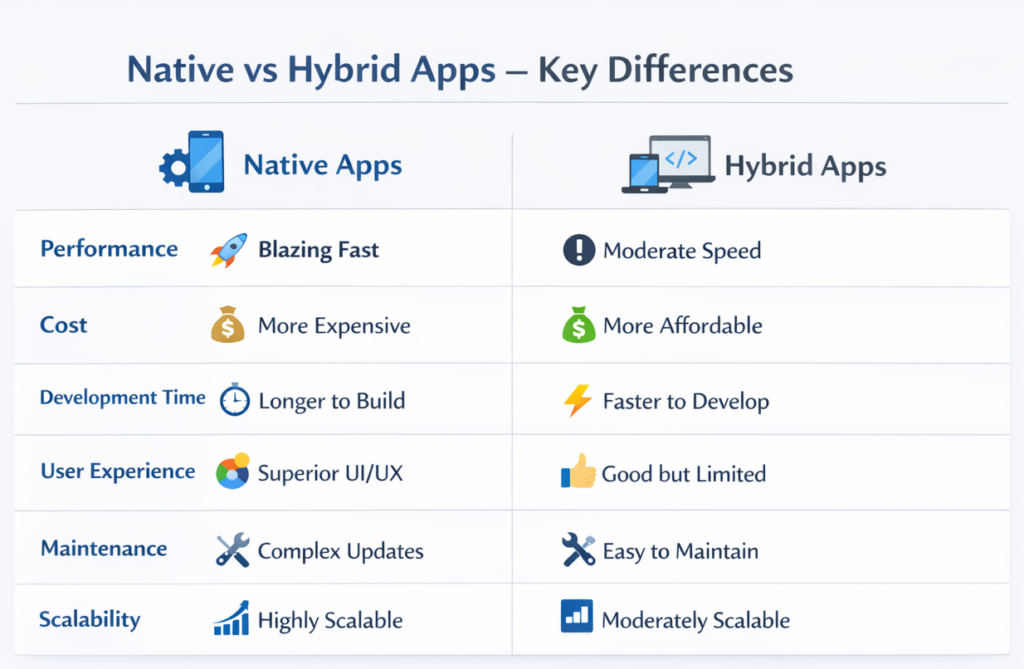
Native vs Hybrid Apps: Side-by-Side Comparison
| Factor | Native Apps | Hybrid Apps |
|---|---|---|
| Performance | ⚡ Extremely high | ⚠️ Moderate |
| Development Time | Slow | Fast |
| Cost | High | Low |
| UX/UI | Best possible | Good |
| Maintenance | Complex | Easy |
| Offline Support | Strong | Limited |
| Scalability | Excellent | Medium |
Which Is Better for Your Business?
Choose Native Apps if:
- You need complex animations
- You rely on GPS, camera, Bluetooth
- You want top-tier performance
- You have a long-term product roadmap
Choose Hybrid Apps if:
- You want MVP quickly
- You have limited budget
- You want cross-platform reach
- You plan frequent updates
🔹 Quote:
“Native apps win on performance. Hybrid apps win on speed to market.”
Cost Comparison (Realistic Estimates)
| App Type | Cost (India) |
|---|---|
| Native | ₹3,00,000 – ₹10,00,000 |
| Hybrid | ₹1,50,000 – ₹4,00,000 |
Performance & SEO Impact
Although mobile apps themselves are not indexed by Google, app performance impacts:
- App Store rankings
- User retention
- Brand trust
- Conversion rate
Poor performance leads to:
- High uninstall rate
- Negative reviews
- Lower engagement
Rare but Crucial Factors
1️⃣ App Store Approval Speed
Native apps pass review faster than hybrid apps.
2️⃣ Security Layer
Native apps allow:
- Biometric authentication
- Hardware encryption
- Secure APIs
Hybrid apps depend on browser security models.
3️⃣ Long-Term Maintenance Cost
Hybrid is cheaper initially. Native is cheaper long-term for scaling.
Real Business Use Case
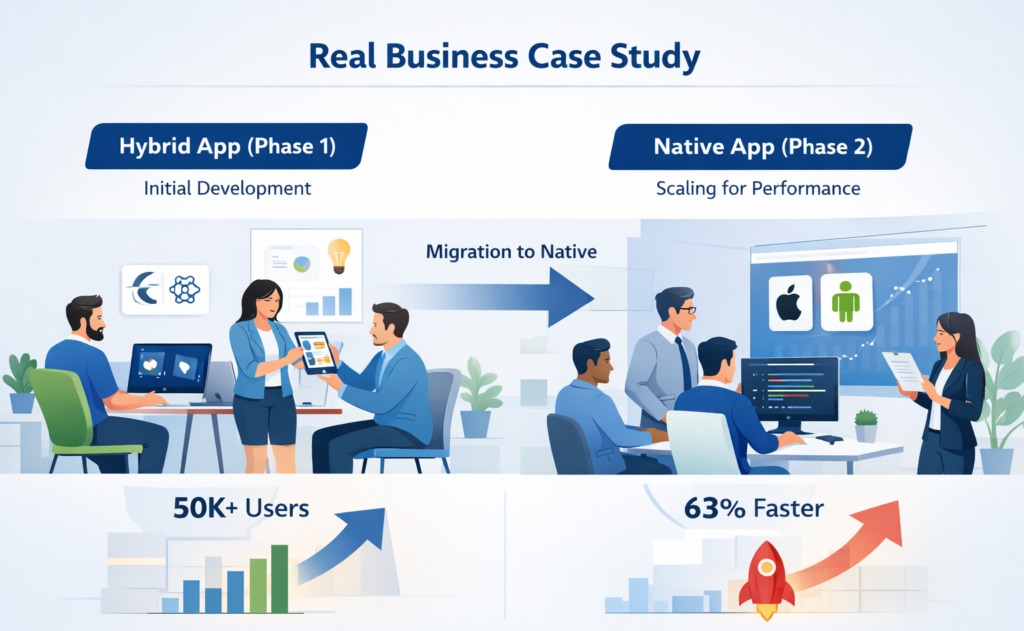
A logistics company builds a Hybrid MVP in Flutter for ₹2L.
After scaling to 50,000 users, performance drops.
They migrate to Native Android & iOS, increasing speed by 63%.
According to Google’s UX research, users abandon apps that load slower than 3 seconds.
Decision Framework (Business Matrix)
| Business Type | Recommendation |
|---|---|
| Startup | Hybrid |
| E-commerce | Native |
| SaaS MVP | Hybrid |
| Banking | Native |
| IoT App | Native |
| Social App | Hybrid → Native |
Final Verdict
There is no universal winner.
However:
- Hybrid apps dominate speed & cost
- Native apps dominate performance & security
Your decision must align with:
Growth strategy
Budget
Timeline
User base
Tags
Share this article
About the Author
Experienced IT professional specializing in enterprise solutions and modern technology implementations.
Related Articles


Stay Updated
Get the latest IT insights delivered to your inbox.