

In today’s rapidly evolving digital world, businesses are constantly under pressure to deliver software faster, cheaper, and with higher quality. As a result, the debate between Low-Code vs Custom Development has become more relevant than ever.
What Is Low-Code Development?
Low-code development refers to a software-building approach that uses visual interfaces, drag-and-drop editors, and pre-built templates. It allows both developers and non-developers (“citizen developers”) to create applications with minimal manual coding.
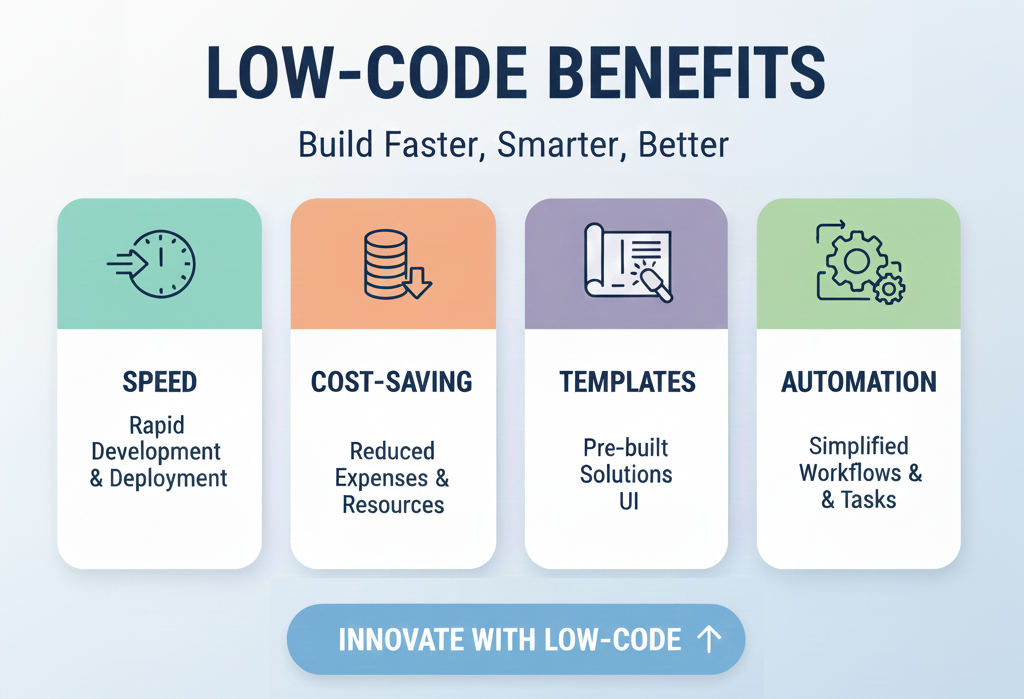
Key Features of Low-Code Platforms
- Pre-designed UI components
- Workflow automation
- API integration tools
- Visual workflow builder
- Fast prototyping
Examples of Low-Code Tools
- OutSystems
- Mendix
- Microsoft PowerApps
- Zoho Creator
When Low-Code Works Best
Low-code is perfect when you need applications quickly, with low investment, and with minimal complexity.
It’s popularly used for:
- Internal tools
- Forms and workflows
- HR & admin apps
- Inventory systems
- Basic dashboards
What Is Custom Development?
Custom development means building software from scratch, exactly based on your business requirements. It offers the highest flexibility, performance, and security — but requires more time and investment.
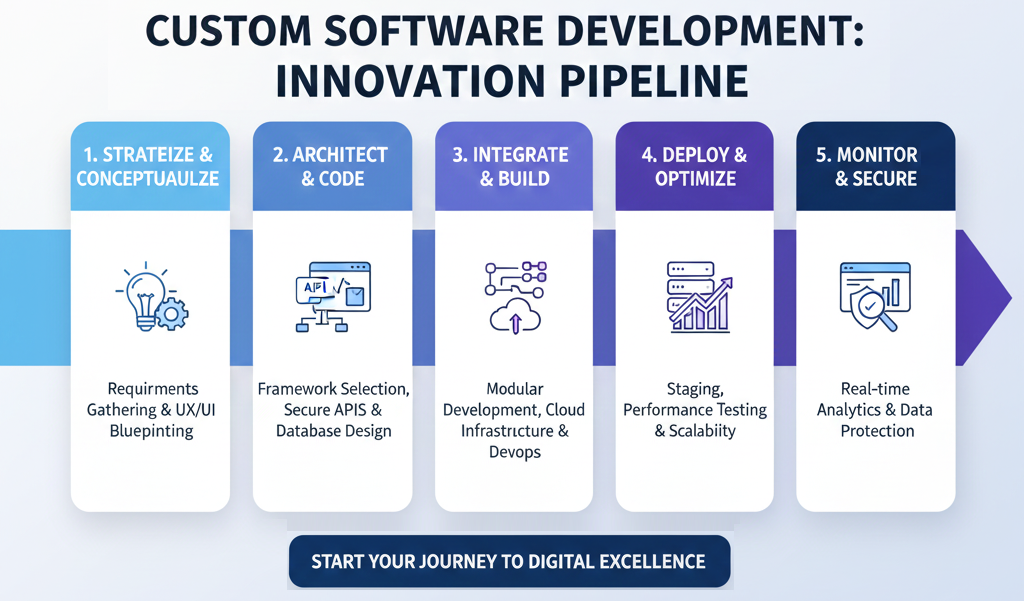
Benefits of Custom Development
- Full control over architecture
- Unlimited customization
- Easily scalable for large enterprises
- Better for high-complexity systems
- Stronger security
When Custom Development Works Best
Choose custom development when you need:
- Complex enterprise-grade applications
- Scalable SaaS platforms
- AI-driven solutions
- Market-ready applications
- High security (fintech, healthcare, etc.)
For example, Technobot System Pvt. Ltd. builds fully customized and scalable IT solutions for businesses across domains. You can explore more here:
Low-Code vs Custom Development: Key Differences
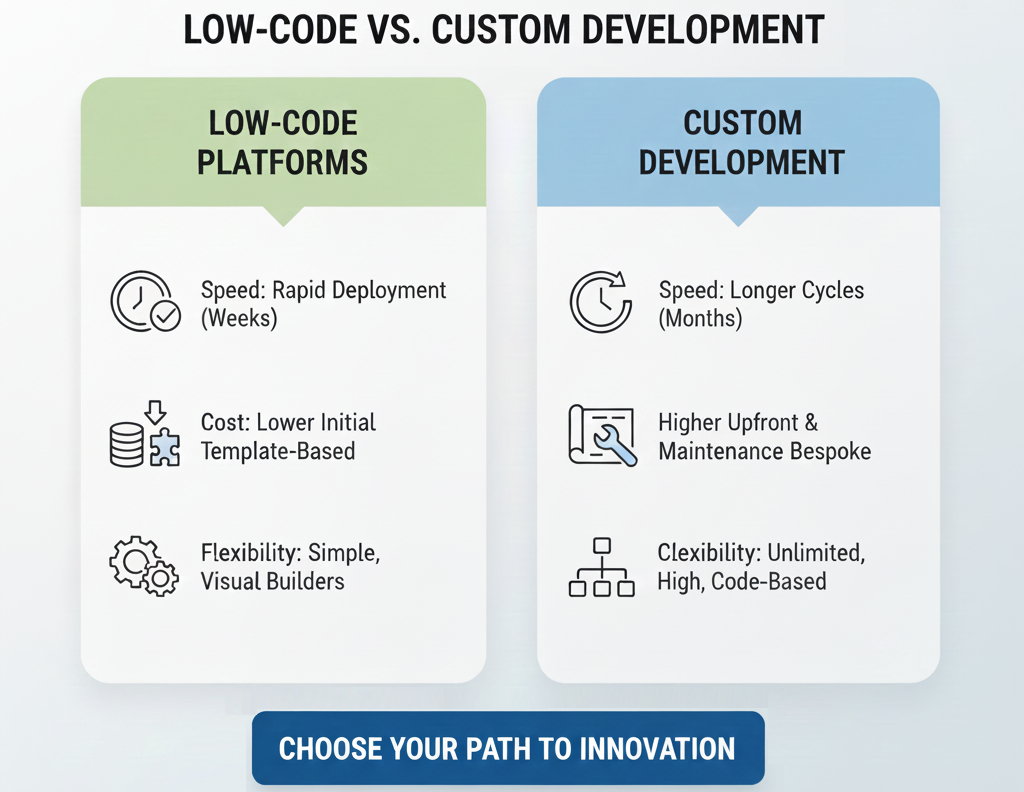
Below is a clear comparison that demonstrates where each approach excels:
Comparison Table
| Factor | Low-Code Development | Custom Development |
|---|---|---|
| Development Speed | Fast | Moderate–Slow |
| Cost | Low | Medium–High |
| Customization | Limited | Unlimited |
| Scalability | Moderate | High |
| Security | Platform-dependent | Highly secure |
| Control | Low | Full |
| Best For | Basic apps, MVPs | Complex solutions |
Pros & Cons of Low-Code Development
Advantages
- Faster time-to-market
- Minimal technical skill required
- Cost-effective
- Perfect for MVPs
- Easy modifications
Limitations
- Limited customization
- Vendor lock-in
- Security risks depend on platform
- Not suitable for complex apps
Pros & Cons of Custom Development
Advantages
- Fully tailored solutions
- High performance
- Greater scalability
- More security layers
- Long-term reliability
Limitations
- Higher cost
- Longer timelines
- Requires skilled developers
How to Decide? Low-Code or Custom Development?
Here are strategic factors to help decision-making:
Choose Low-Code When:
- You need fast delivery
- Budget is limited
- You are building prototypes or MVPs
- The app is simple
- It’s an internal workflow tool
Choose Custom Development When:
- You need a full-scale product
- Security is a top priority
- High customization is required
- You expect long-term scalability
- You are building customer-facing applications
Real-Life Use Cases
Low-Code Use Cases
- HR attendance apps
- Lead management tools
- Internal approval workflows
- Field service apps
- Basic reporting dashboards
Custom Development Use Cases
- E-commerce marketplaces
- AI-based platforms
- CRM/ERP solutions
- Healthcare management systems
- Banking & fintech apps
Expert Recommendation
While low-code platforms offer speed and simplicity, custom development provides long-term value and enterprise-strength capability.
👉 If your requirement is short-term, internal, or simple → Go for Low-Code
👉 If your requirement is scalable, complex, and long-term → Choose Custom Development
For tailored enterprise solutions, you may consult Technobot System Pvt. Ltd. here:
🔗 https://technobotsystem.com/
Conclusion
Both low-code and custom development are powerful — but they solve different problems.
Your decision should depend on timeline, budget, complexity, scalability needs, and long-term vision.
As businesses move toward digital transformation in 2025, choosing the right development method can significantly impact growth, automation, and competitiveness.
If you’re still unsure, partnering with an experienced IT company like Technobot System Pvt. Ltd. can help you select the best route.
Want a Final Summary or Social Media Captions for This Blog?
Just tell me — I can generate it instantly!
Tags
Share this article
About the Author
Experienced IT professional specializing in enterprise solutions and modern technology implementations.
Related Articles

Stay Updated
Get the latest IT insights delivered to your inbox.