
Introduction: Why 5G Is a Game-Changer for Mobile Apps
The evolution of mobile applications has always been tied to network advancements. From 3G enabling basic internet access to 4G unlocking real-time streaming and cloud apps, each leap has reshaped how applications are designed and consumed. Now, 5G technology is setting the stage for the most transformative shift yet.
With ultra-low latency, lightning-fast data speeds, and massive device connectivity, 5G is not just improving existing mobile apps—it is redefining what mobile applications can become. As businesses race toward digital-first experiences, understanding how 5G is changing the future of mobile applications has become critical for long-term success.
At Technobot System Pvt. Ltd., mobile app strategies are increasingly built with 5G-ready architectures to ensure future scalability, performance, and innovation.
What Makes 5G Different from Previous Networks?
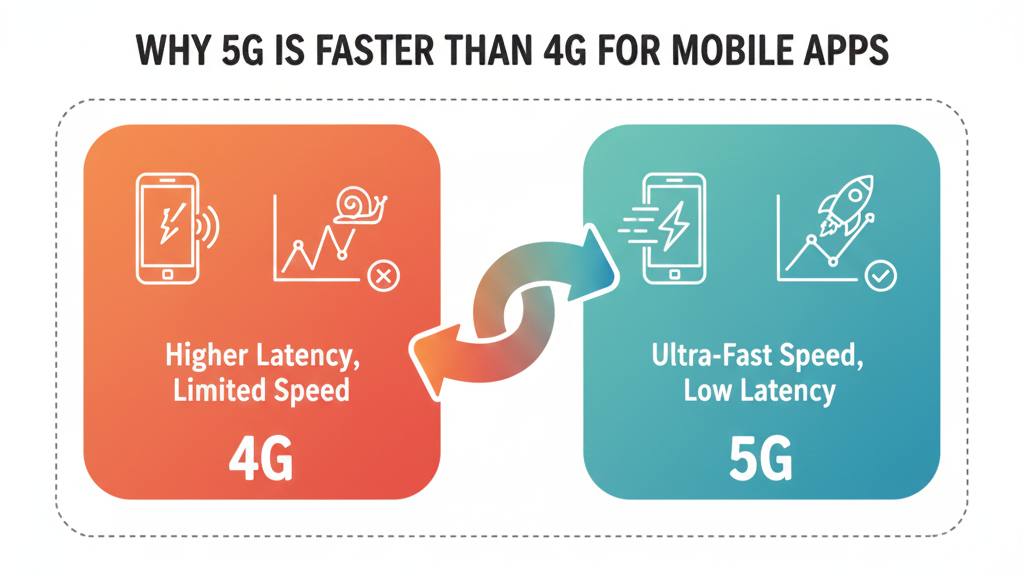
5G is not just a faster version of 4G. It is a completely new network architecture designed to support next-generation digital experiences.
Key Technical Advancements of 5G
- Up to 100x faster speeds than 4G
- Latency as low as 1 millisecond
- Higher bandwidth capacity
- Support for millions of connected devices per square kilometer
As a result, mobile apps can now operate in near real-time, unlocking experiences that were previously impossible.
How 5G Is Changing the Future of Mobile Applications
1. Ultra-Fast App Performance and Load Times
Speed is one of the most visible impacts of 5G. Mobile applications that once struggled with buffering, slow loading screens, or delayed responses now deliver instant interactions.
What this means for apps:
- Faster app launches
- Seamless video streaming in 4K and 8K
- Real-time cloud-based processing
For businesses working with development partners like Technobot System Pvt. Ltd., this allows the creation of performance-driven applications that retain users longer and reduce bounce rates.
2. Low Latency: The Backbone of Real-Time Experiences
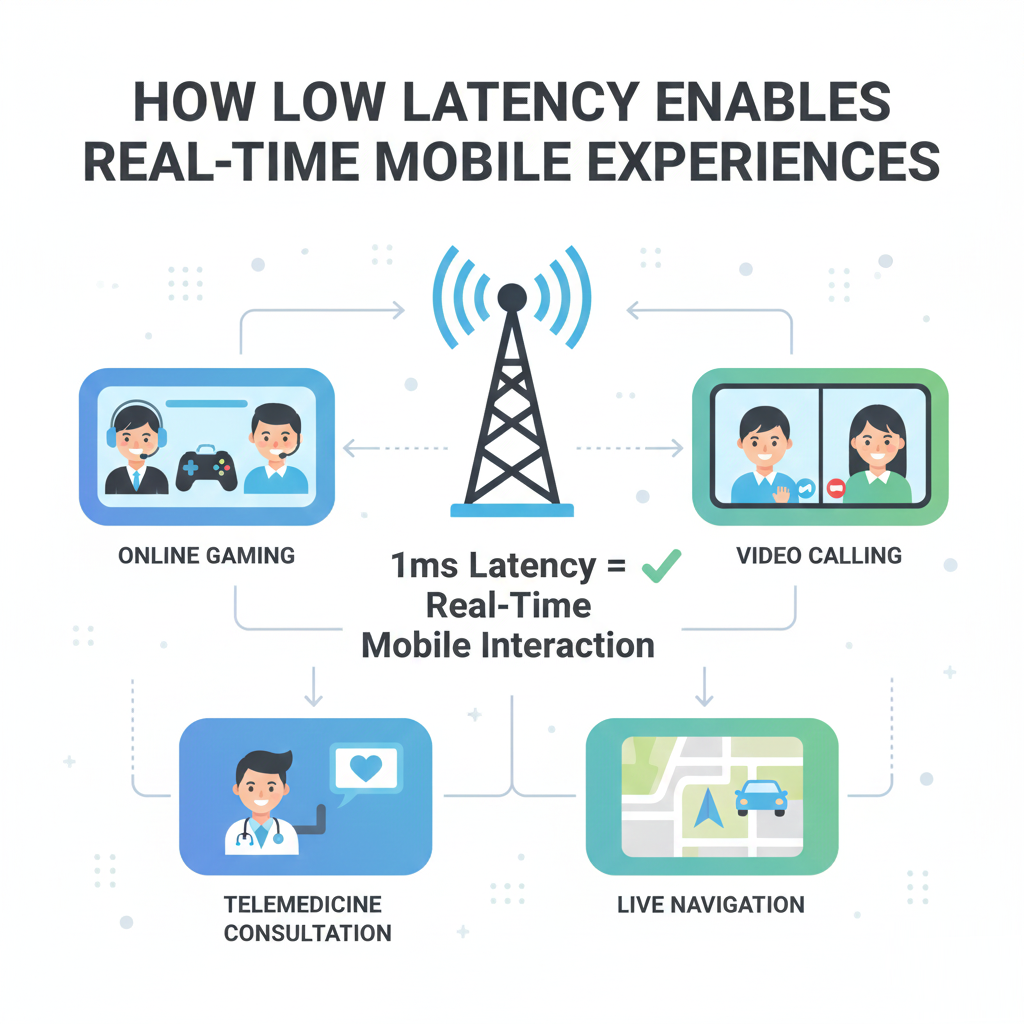
Latency refers to the delay between an action and its response. 5G dramatically reduces this delay, making real-time applications truly real-time.
Industries benefiting the most:
- Online gaming
- Financial trading apps
- Live collaboration platforms
- Telemedicine applications
For example, a video consultation app built on 5G can offer near face-to-face responsiveness—something earlier networks could not reliably deliver.
3. Cloud-Native Mobile Applications Become the Norm ☁️
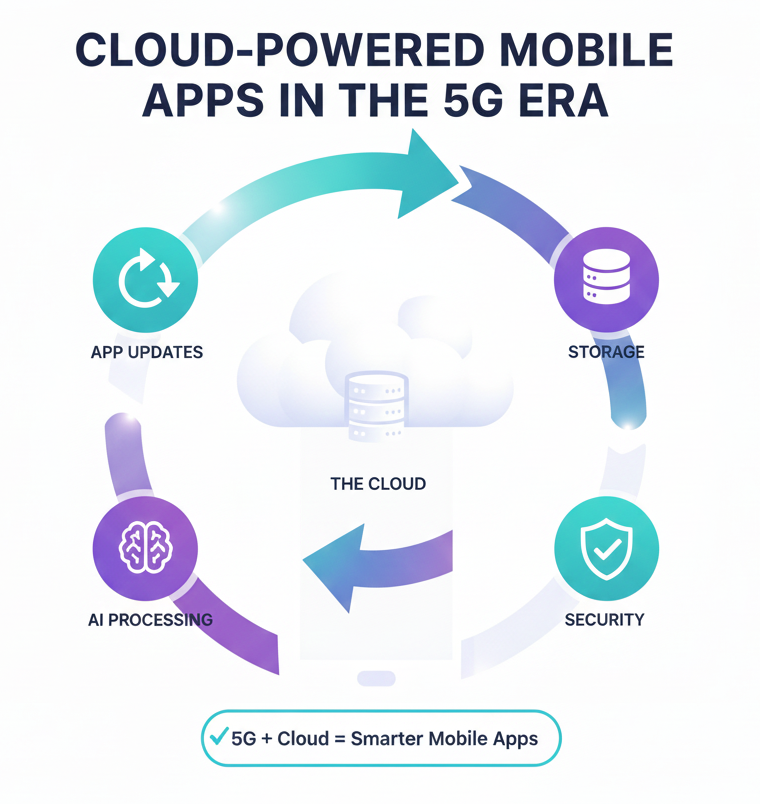
With 5G, mobile applications no longer need to rely heavily on device hardware. Instead, processing shifts to the cloud, enabling lightweight apps with powerful capabilities.
Key advantages include:
- Reduced app size
- Better battery efficiency
- Continuous updates without reinstallation
This approach aligns with modern development practices followed by organizations like Technobot System Pvt. Ltd., where cloud-first mobile solutions are designed for scalability and long-term cost efficiency.
4. Augmented Reality (AR) & Virtual Reality (VR) Go Mainstream
Before 5G, AR and VR apps faced challenges such as lag, motion sickness, and poor visual fidelity. 5G eliminates these barriers.
New possibilities include:
- AR-based shopping experiences
- Virtual real estate walkthroughs
- Immersive training and simulations
- Interactive educational apps
These applications demand high bandwidth and ultra-low latency—both of which are native strengths of 5G networks.
5. AI-Powered Mobile Apps Get Smarter
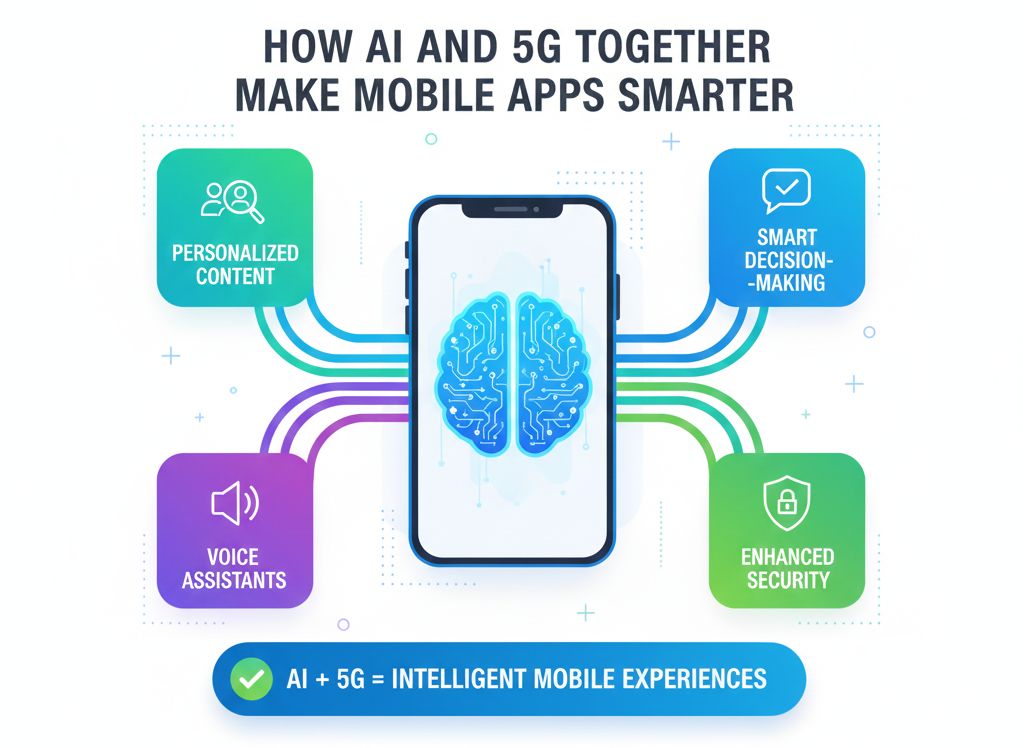
5G acts as a catalyst for AI-driven mobile applications by enabling real-time data transfer between devices and cloud-based AI engines.
Examples include:
- Predictive health monitoring apps
- Personalized content recommendation engines
- Smart voice assistants with instant responses
When AI and 5G converge, mobile apps become more adaptive, context-aware, and intelligent—enhancing both user experience and business outcomes.
6. IoT-Integrated Mobile Applications at Massive Scale
5G supports a massive number of connected devices simultaneously, making it ideal for IoT-powered mobile applications.
Use cases include:
- Smart city management apps
- Industrial monitoring dashboards
- Connected healthcare devices
- Smart home control systems
Mobile applications now act as command centers for entire IoT ecosystems, delivering real-time insights and control.
7. Enhanced Security and Network Slicing
5G introduces network slicing, allowing apps to operate on dedicated virtual networks with customized performance and security levels.
Benefits for mobile applications:
- Higher data protection
- Improved reliability for mission-critical apps
- Reduced risk of congestion-related failures
This is particularly important for finance, healthcare, and enterprise-grade mobile solutions.
📱 How Businesses Can Prepare for 5G-Driven Mobile Development
To fully leverage 5G, businesses must rethink traditional mobile app strategies.
Best Practices for 5G-Ready Apps
- Design cloud-native architectures
- Optimize apps for real-time processing
- Integrate AI and analytics early
- Prioritize security-by-design principles
Organizations partnering with experienced development firms like Technobot System Pvt. Ltd. gain a strategic advantage by building applications that are future-proof rather than reactive.
👉 Learn more about scalable digital solutions at https://www.technobotsystem.com
The Future Outlook: What’s Next After 5G?
As 5G adoption grows globally, mobile applications will continue evolving toward:
- Fully immersive digital experiences
- Seamless human–machine interactions
- Real-time global collaboration
- Autonomous and intelligent systems
In essence, 5G is not the destination—it is the foundation for the next decade of mobile innovation.
Final Thoughts
The question is no longer whether 5G will change mobile applications—it already has. The real question is how quickly businesses adapt. Companies that embrace 5G-driven mobile strategies today will dominate tomorrow’s digital landscape.
By combining advanced network capabilities with expert development practices, organizations like Technobot System Pvt. Ltd. are helping businesses turn 5G potential into real-world success.
💡 “5G doesn’t just make apps faster—it makes the impossible practical.”
Tags
Share this article
About the Author
Experienced IT professional specializing in enterprise solutions and modern technology implementations.
Related Articles
Stay Updated
Get the latest IT insights delivered to your inbox.