
Introduction: Why Mobile App Security in 2026 Is Non-Negotiable
In today’s digital-first world, mobile applications have become the backbone of customer engagement, business operations, and financial transactions. However, as mobile adoption increases, so do security threats.
According to recent global cybersecurity reports, mobile-based attacks are expected to grow by over 40% by 2026. Therefore, ignoring mobile app security is no longer an option—it’s a serious business risk.
Moreover, with stricter regulations, advanced AI-driven cyberattacks, and growing user awareness, Google now prioritizes secure, trustworthy digital experiences in search rankings.
👉 This guide explains Mobile App Security Best Practices for 2026 in a deep, structured, and future-ready manner, helping businesses rank higher while protecting users.
What Is Mobile App Security?
Mobile app security refers to the strategies, tools, and practices used to protect mobile applications from threats such as:
- Data breaches
- Malware attacks
- Unauthorized access
- API vulnerabilities
- Reverse engineering
In other words, it ensures that user data, business logic, and backend systems remain protected throughout the app lifecycle.
Why Mobile App Security Will Be Even More Critical in 2026
Before diving into best practices, let’s understand why security demands will rise.
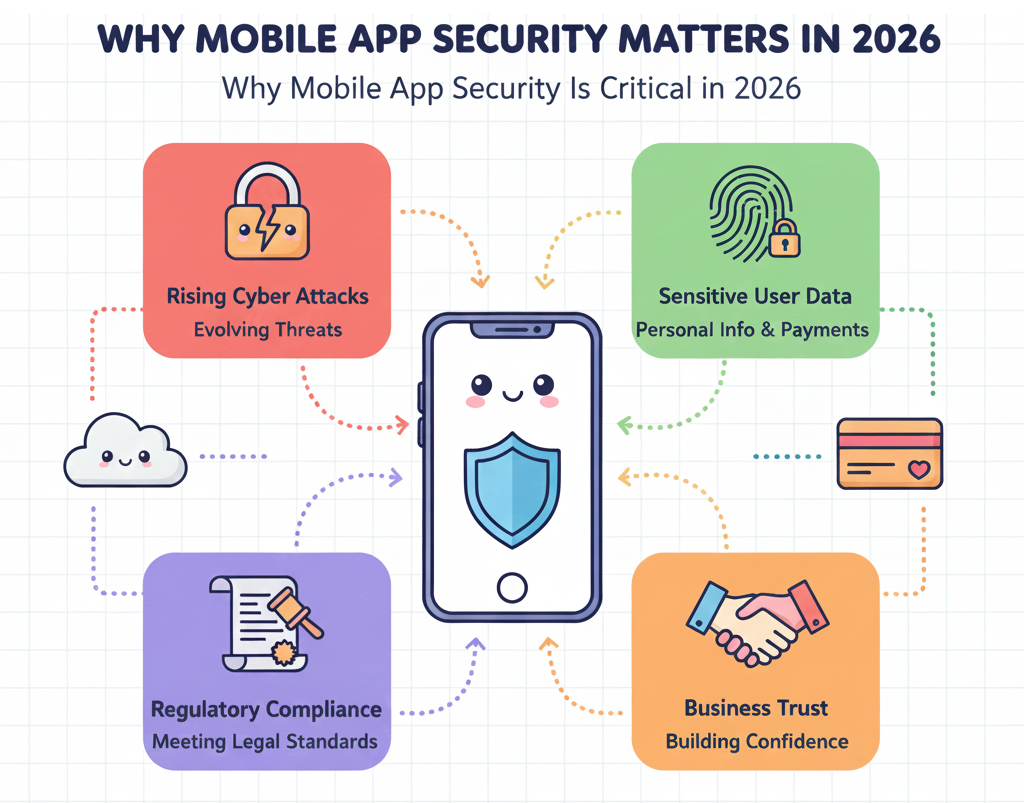
Key Reasons:
- Increased mobile payment usage
- AI-powered hacking techniques
- Cloud & API-based architectures
- Stronger data protection laws (GDPR, DPDP, CCPA updates)
- Google’s E-E-A-T & trust-based ranking factors
👉 Businesses that fail to prioritize security may face ranking drops, legal penalties, and brand damage.
Mobile App Security Best Practices for 2026
Below are industry-validated and future-focused security practices, explained deeply for clarity.
1. Secure Authentication & Authorization
Authentication remains the first line of defense.
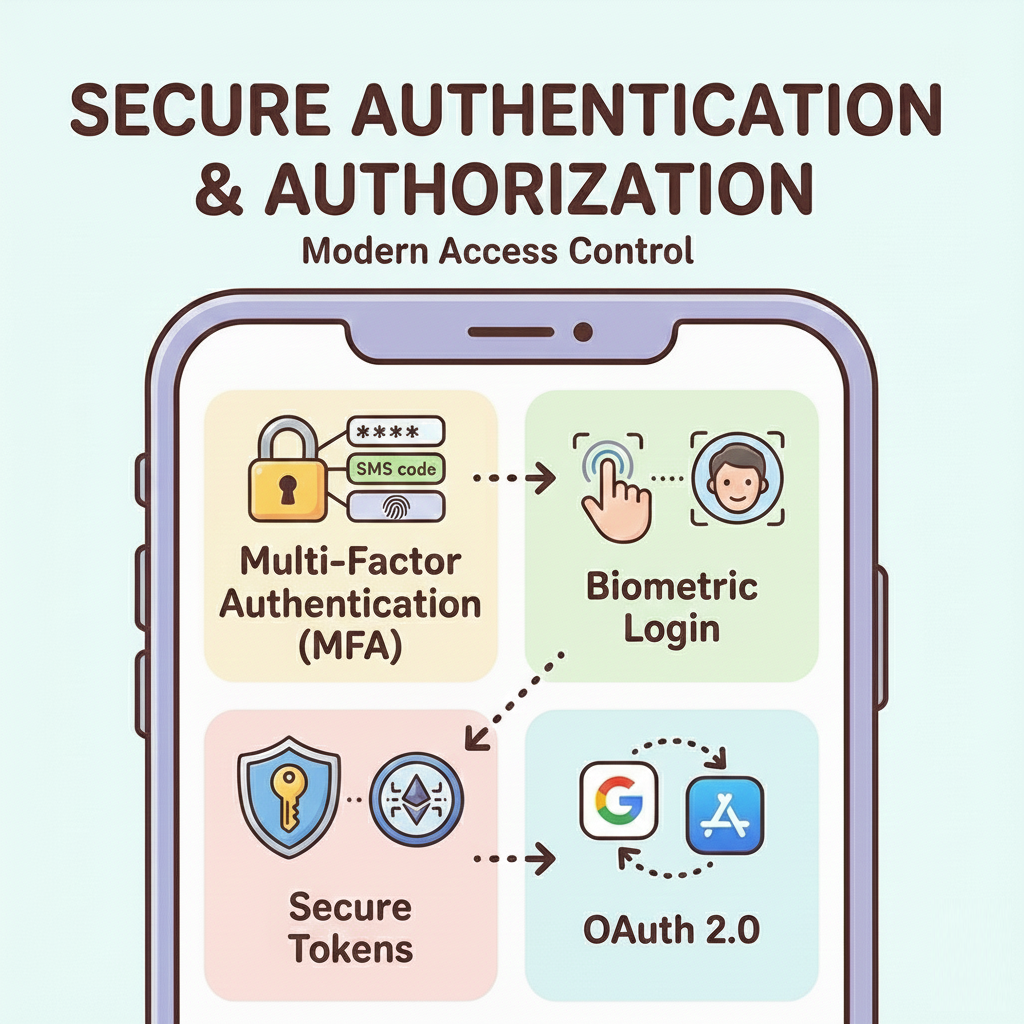
Best Practices:
- Implement Multi-Factor Authentication (MFA)
- Use biometric authentication (fingerprint, Face ID)
- Apply OAuth 2.0 and OpenID Connect
- Avoid storing credentials locally
🔒 “The strongest apps assume breach and design defenses accordingly.”
🔗 Internal Link Placement:
Businesses building secure login systems can explore custom mobile app development solutions by Technobot System Pvt. Ltd.:
👉 https://technobotsystem.com
2. Encrypt Data at Rest and in Transit
Even if attackers intercept data, encryption ensures uselessness.
Recommended Standards:
- AES-256 for stored data
- TLS 1.3 for network communication
- Encrypted local storage (Keychain / Keystore)
Moreover, avoid transmitting sensitive data unnecessarily.
3. Secure APIs & Backend Infrastructure
Modern apps rely heavily on APIs—making them prime attack targets.
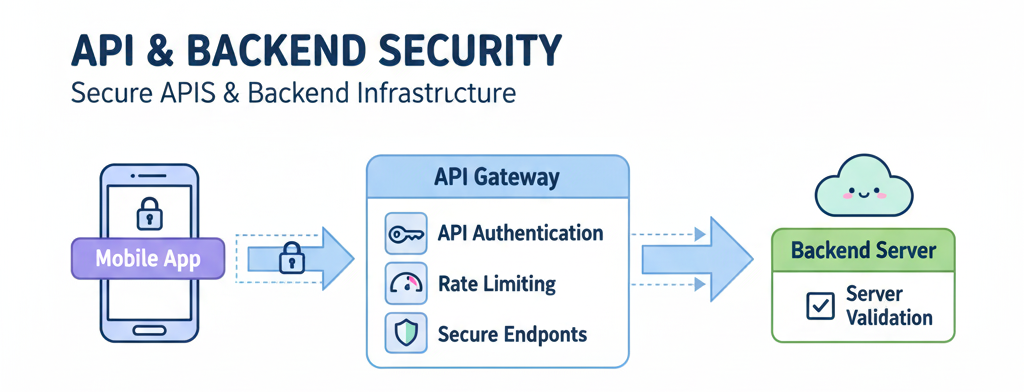
Security Measures:
- Use API authentication tokens
- Rate limiting to prevent brute force attacks
- Validate server-side requests
- Avoid exposing internal endpoints
🔗 OWASP Mobile Top 10 – https://owasp.org/www-project-mobile-top-10/
4. Regular Penetration Testing & Security Audits
Testing identifies vulnerabilities before hackers do.
Recommended Approach:
- Quarterly penetration testing
- Static & Dynamic Application Security Testing (SAST & DAST)
- Third-party audits
👉 Google favors apps and websites that actively reduce vulnerabilities.
5. AI-Driven Threat Detection (2026 Trend)
By 2026, AI will not only attack—but also defend.
AI Security Capabilities:
- Behavioral anomaly detection
- Real-time fraud monitoring
- Automated threat response
🤖 “AI doesn’t replace security teams—it amplifies them.”
6. Secure Third-Party SDKs & Libraries
Many breaches occur through unverified dependencies.
Best Practices:
- Audit SDK permissions
- Use trusted sources only
- Remove unused libraries
- Monitor vulnerability disclosures
7. Compliance with Global Security Regulations
Compliance improves trust and SEO credibility.
Key Regulations to Follow:
- GDPR (EU)
- DPDP Act (India)
- CCPA (California)
- PCI-DSS (Payment apps)
Apps that comply are more likely to rank higher and get approvals faster.
8. Secure Code Practices & Obfuscation
Source code protection prevents reverse engineering.
Techniques:
- Code obfuscation
- Minimize hard-coded secrets
- Disable debug mode in production
- Root & jailbreak detection
9. Secure CI/CD & DevSecOps Integration
Security should not be an afterthought.
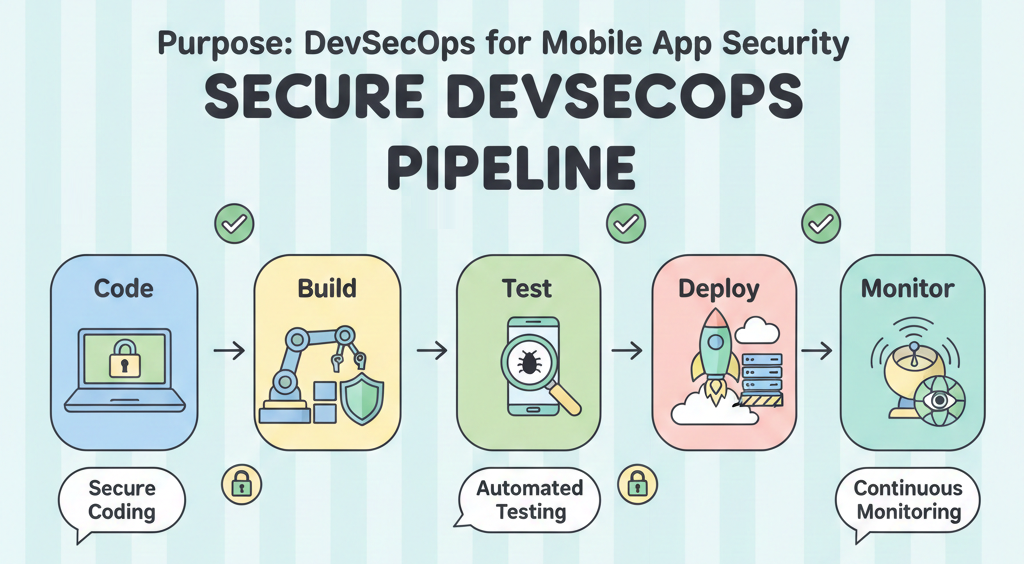
DevSecOps Best Practices:
- Security checks in CI pipelines
- Automated vulnerability scans
- Secure cloud configurations
Learn how secure development workflows are implemented in modern projects:
👉 https://technobotsystem.com/blogs
10. Educate Teams & Promote Security Culture
Technology alone is not enough.
Focus Areas:
- Secure coding training
- Phishing awareness
- Incident response drills
🧠 “Human awareness is the strongest firewall.”
Impact of Mobile App Security on Google Rankings
Google indirectly evaluates app security through:
- Trust signals
- User engagement
- App reviews
- Site authority
Secure apps lead to:
- Lower bounce rates
- Higher retention
- Better crawlability
Rare but Powerful Security Insights (2026 Edition)
- Rare Insight #1: Apps with clear privacy explanations perform better in search visibility.
- Rare Insight #2: Minimal permission requests improve Play Store rankings.
- Rare Insight #3: Security transparency boosts user trust & brand authority.
Final Thoughts: Building Secure Apps That Rank & Scale
To summarize, Mobile App Security Best Practices for 2026 are no longer optional—they are a ranking factor, trust signal, and business safeguard.
By implementing these strategies, businesses can:
- Improve Google visibility
- Protect user data
- Ensure regulatory compliance
- Build long-term brand trust
If you’re planning to build or secure a mobile application using modern, security-first architecture, partnering with an experienced development team like Technobot System Pvt. Ltd. ensures both performance and protection.
Tags
Share this article
About the Author
Experienced IT professional specializing in enterprise solutions and modern technology implementations.
Related Articles


Stay Updated
Get the latest IT insights delivered to your inbox.